
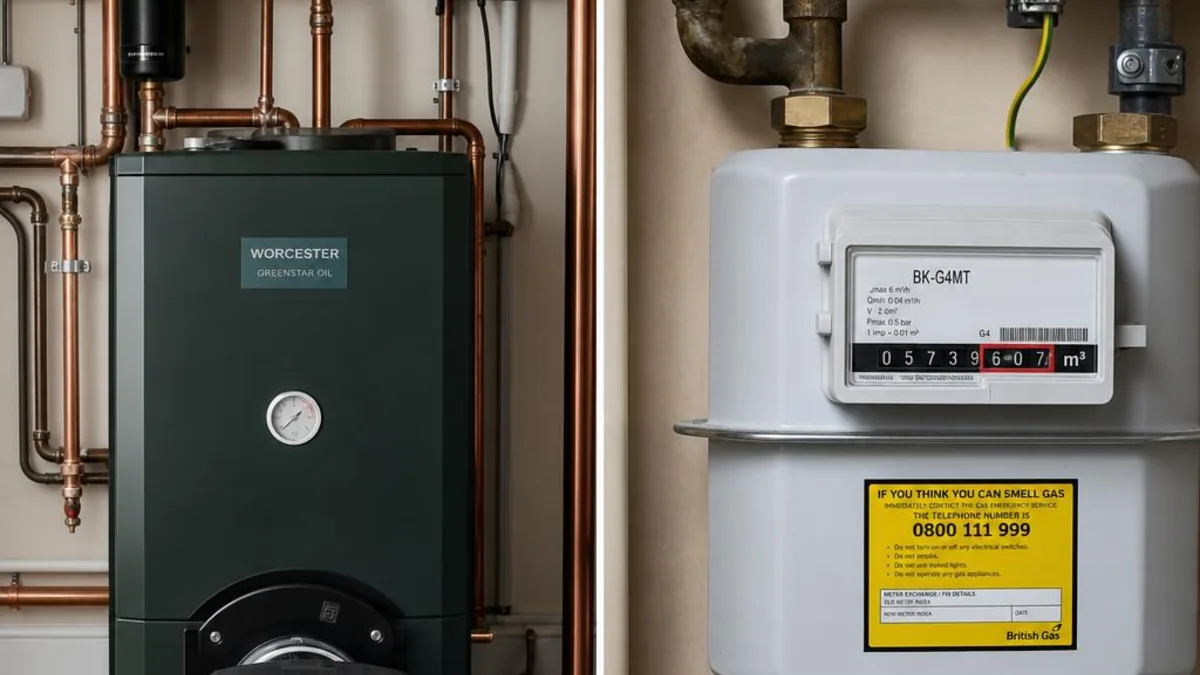
Who this comparison is for
Around 1.5 million UK homes are not connected to the mains gas network. Most are in rural areas — remote villages, farms and outlying properties where laying a gas main is not commercially viable. If your home has a heating oil tank, you may wonder whether it would be cheaper to connect to gas if a main passes nearby, or whether oil stacks up well against gas on a pure cost basis.
This guide compares the two fuels on running costs, fixed charges and the capital cost of switching, using 2026 UK price data.
Running cost comparison
Both fuels are measured in pence per kilowatt hour (kWh) to allow a fair comparison, since they have different energy densities.
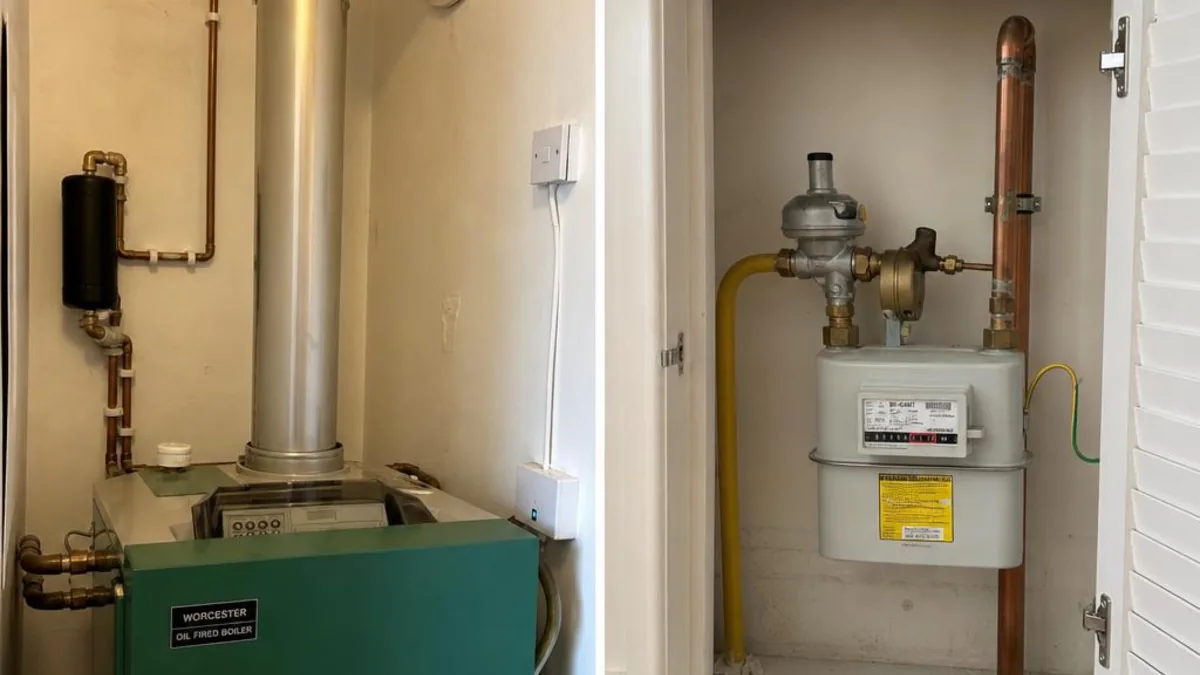
- Heating oil (kerosene) — kerosene has an energy content of around 10.35 kWh per litre. At an example price of 70p per litre and a boiler efficiency of 90%, the delivered cost works out at approximately 7.5p per kWh.
- Mains gas — the Ofgem price cap unit rate in Q3 2026 is approximately 6.24p per kWh (inclusive of VAT at 5%). At 90% boiler efficiency, the delivered cost is approximately 6.9p per kWh.
On this basis, mains gas is currently around 30% cheaper per unit of heat delivered than heating oil. For a home using 20,000 kWh of heat per year — typical for a three-bedroom house — the annual fuel bill difference is approximately:
- Heating oil: £1,980
- Mains gas: £1,380
- Saving from gas: approximately £600 per year
However, oil prices are volatile. During periods of low crude oil prices — as seen in 2015–2016 and briefly in 2020 — heating oil can approach or even undercut gas on a delivered-cost basis. There is no guarantee that gas will remain cheaper over the long term.
Standing charges and fixed costs
Mains gas customers pay a standing charge regardless of consumption — typically around 30 to 32p per day in 2026, or around £110 to £117 per year. Heating oil users have no standing charge, but must budget for periodic tank maintenance (inspections, occasional filter replacement) and the capital cost of tank ownership.
Heating oil users also carry the risk of price spikes, since they must buy oil in advance at the current market price. Gas customers on the price cap are protected from short-term spikes to some degree.
Boiler efficiency matters
Both gas and oil condensing boilers are rated at 90 to 92% efficiency (AFUE) when properly serviced. If your oil boiler is a non-condensing model (common in properties installed before 2007), its real-world efficiency may be only 75 to 82%. Replacing an old non-condensing oil boiler with a new condensing model can reduce fuel consumption by 15 to 20% — roughly equivalent to lowering your fuel cost by 15 to 20p per litre.
OFTEC-registered engineers can assess your current boiler's performance and advise on whether a replacement would be cost-effective given your consumption levels. Find an OFTEC engineer at oftec.org.
Cost of switching to gas
If a gas main already passes your property boundary, connection costs are much lower than if infrastructure needs to be laid. In 2026, a typical gas connection and boiler replacement package costs:
- Gas connection (where a main is available) — £1,000 to £3,500 depending on distance to the main and civil works required
- New gas condensing boiler — £2,000 to £4,000 installed, depending on size and brand
- Removal of oil tank — £300 to £700
- Total indicative cost — £3,300 to £8,200
At a saving of £600 per year on fuel, a £5,000 all-in switching cost would take around 8 years to pay back. If you are also replacing an end-of-life boiler, the comparison changes — you would be spending money on a new boiler regardless, so the marginal cost of switching fuel is just the connection charge.
If no gas main passes your property, the cost of infrastructure can run to tens of thousands of pounds and is rarely viable for a single household.
Environmental considerations
Both fuels produce CO₂ when burned. Heating oil emits approximately 249 gCO₂ per kWh (net calorific value basis); natural gas emits approximately 185 gCO₂ per kWh. Gas therefore has a lower carbon intensity per unit of heat, though both are significantly higher than heat pump or biomass alternatives.
The UK government's Future Homes Standard will require new homes to be built with low-carbon heating from 2025. Existing oil and gas boilers can continue to be replaced like-for-like in the near term, but longer-term policy direction is toward electrification. Homeowners planning a major boiler replacement may wish to consider an air source heat pump — particularly if they are in a well-insulated property — rather than locking in another 15 years of fossil fuel use. See our rural heating guide for a full comparison of alternatives.
Which is right for your home?
Gas is currently cheaper to run per unit of heat in the UK and has no standing-charge equivalent to gas standing charges working against it. If a gas connection is practical and affordable, it will typically pay back within 5 to 10 years for a high-consumption household.
However, if your property has no nearby gas main, switching is not a realistic option. In that case, focus on:
- Ensuring your oil boiler is a modern condensing type and is serviced annually
- Ordering oil in bulk and comparing suppliers at every order — use our free comparison tool
- Improving insulation to reduce the volume of fuel you need regardless of which fuel you use
- Considering a heat pump if you are planning a full heating system replacement and your property is suitable