

Tank sizes and types
Domestic heating oil tanks are most commonly made from polyethylene (plastic) or steel. Plastic tanks are now the most common choice for new installations — they do not corrode, are lighter to install and are available in a wide range of sizes.
Common domestic sizes range from 1,000 litres to 3,500 litres. A typical three-bedroom house with an oil-fired central heating system uses around 2,500 to 3,500 litres per year, so a 1,500-litre tank allows roughly two deliveries per year.
- 1,000L — suitable for small homes or as a secondary tank
- 1,500L — most common size for a 3 to 4 bedroom home
- 2,500L — good for larger homes or those wanting fewer deliveries
- 3,500L — for large properties or those in areas with restricted delivery access
Bunding requirements
A bunded tank has an outer shell that contains at least 110% of the inner capacity — so if the inner tank leaks or fails, the oil cannot escape into the ground. Building Regulations in England and Scotland require bunded tanks in most domestic situations. Always check the current regulations with your local authority before installation.
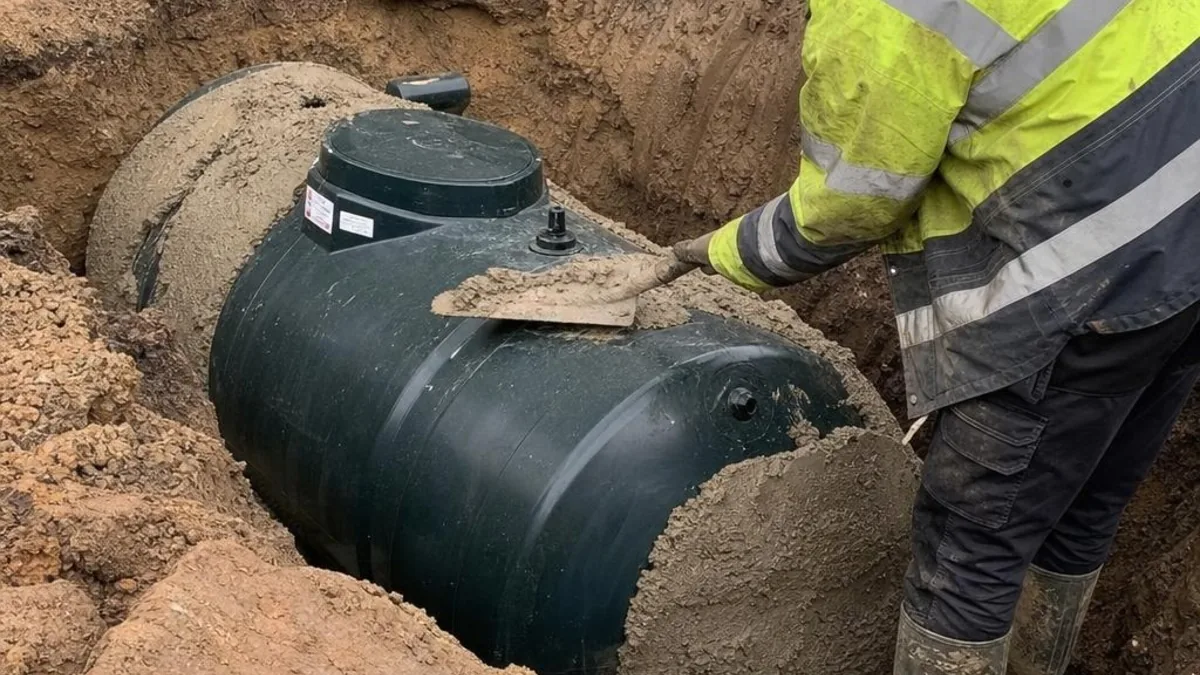
Planning and installation
Oil tanks should be installed by a competent person and meet the requirements of Building Regulations Part J (England and Wales) or equivalent. Key requirements typically include minimum distances from buildings, boundaries and oil-burning appliances, and a stable base capable of supporting the full weight when filled.
Tank maintenance
Have your tank inspected every 5 years as a minimum, or immediately if you notice any sign of leaks, staining or corrosion. Keep the area around the tank clear, check that the vent and fill pipes are unobstructed, and ensure the sight gauge is working correctly so you can accurately monitor your oil level.
When to replace your tank
Plastic tanks have a typical lifespan of 20 to 25 years. Steel tanks may last longer but are more prone to corrosion. Warning signs include visible cracks or crazing in the outer shell, persistent smell of oil, staining around the base, or a gauge that is difficult to read accurately. If in doubt, have a qualified technician inspect it.