
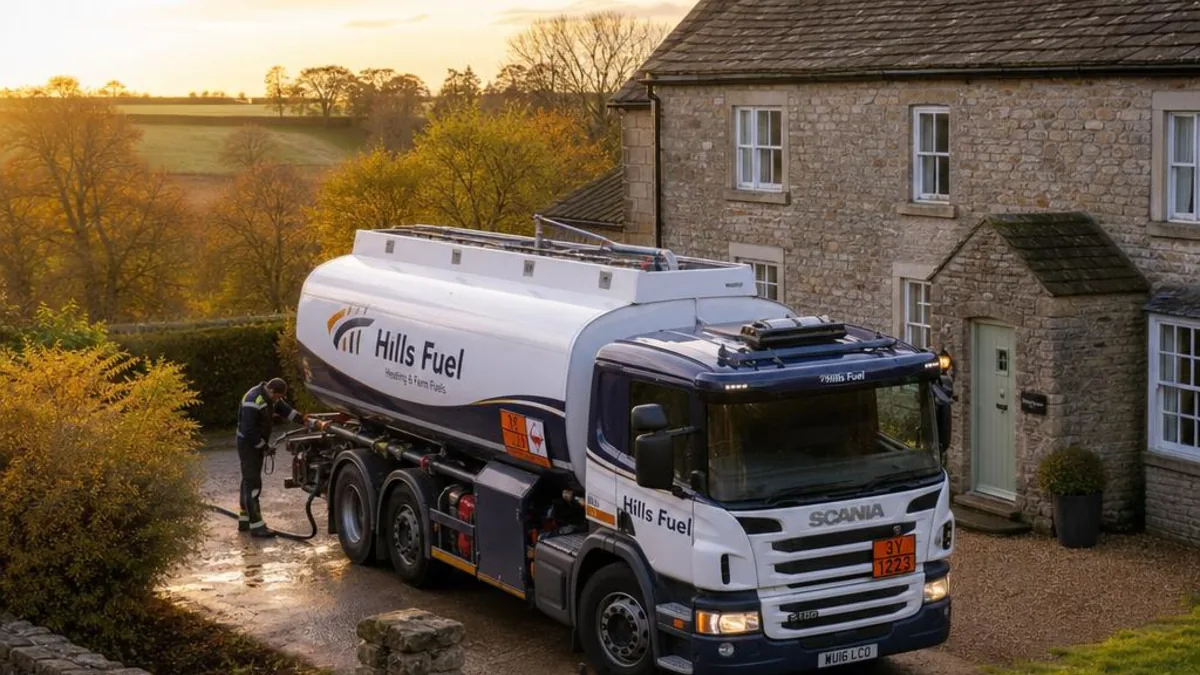
What is heating oil?
Heating oil is kerosene — a refined petroleum product also called 28-second oil or BS 2869 Class C2 kerosene. It is used to fire oil-fired boilers and range cookers in homes that are not connected to the mains gas network. Around 1.5 million UK households rely on it as their main source of heat and hot water.
Heating oil is not the same as diesel, although they are both petroleum distillates. Domestic kerosene burns cleaner and at a lower temperature, which is why it is suited to domestic boilers. Using the wrong fuel in a boiler can cause damage and void warranties.
How much does heating oil cost?
Heating oil is priced in pence per litre, including 5% VAT. What you pay varies by:
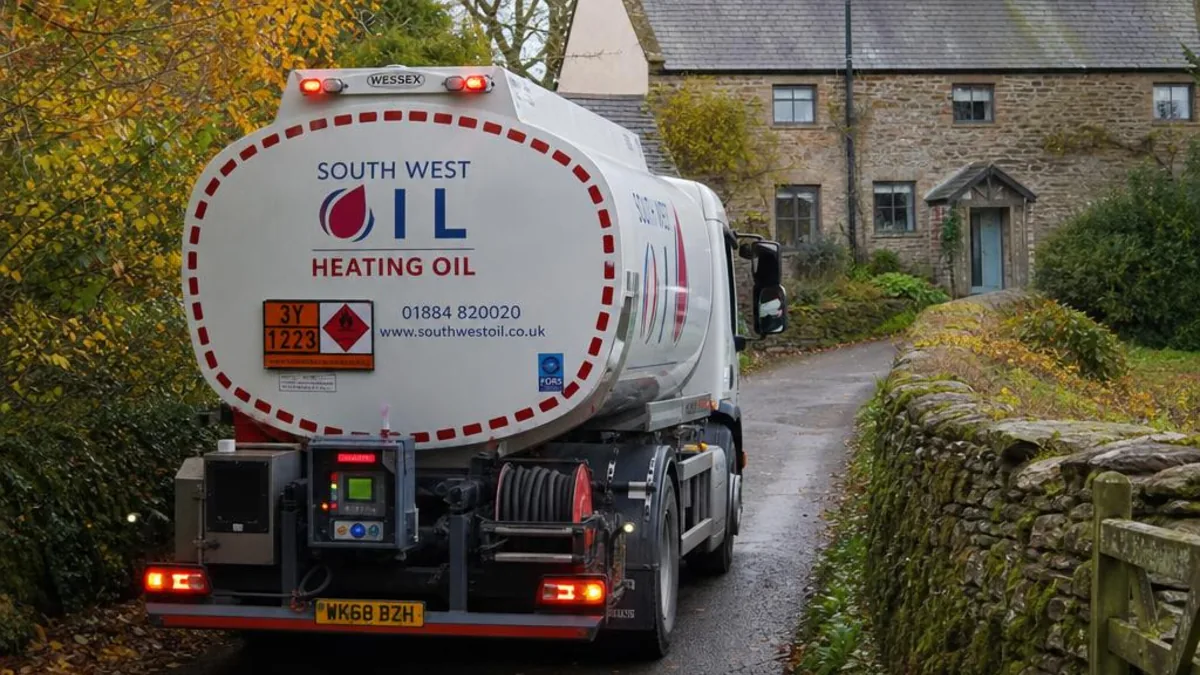
- Volume — larger orders cost less per litre. Ordering 900 litres instead of 300 typically saves around 4p per litre.
- Region — delivery costs vary. Northern Ireland and parts of Scotland often have the most competitive prices due to dense local markets. London and remote rural areas tend to be dearer. Oil-heated homes in Northern Ireland should also check whether they can claim the £100 heating oil voucher, which opens on 9 September 2026.
- Supplier — prices vary by up to 5p per litre between suppliers on the same day in the same postcode.
- Season — demand is highest in autumn and winter, when prices can rise. Summer orders often secure better availability.
- Crude oil price — the international oil market sets the floor. UK heating oil tracks Brent crude with a lag of a few weeks.
How much should I order?
Most households order between 500 and 1,000 litres at a time. The right amount depends on:
- Your tank capacity — check the manufacturer data plate or measure it. Never fill above 90% of capacity.
- Your current level — use a dip rod or gauge. Order when you reach roughly a quarter full to avoid running dry.
- The season — a summer top-up of 500 litres often makes sense; a pre-winter fill might be 900 to 1,000 litres.
Ordering more per delivery is almost always cheaper per litre, so ordering more, less often, is generally the better strategy — provided your tank is large enough.
When is the cheapest time to buy?
Demand for heating oil follows a clear seasonal pattern. The lowest-demand months are May through August, when boilers are used only for hot water. Higher availability in summer can mean shorter lead times and better prices, though this is not guaranteed — crude oil movements can push prices higher regardless of season.
The single most reliable way to save money is to avoid emergency deliveries. Emergency heating oil costs 8 to 15p per litre more than a planned standard delivery. On 500 litres, that is £40 to £75 extra — roughly the same as buying at the worst supplier versus the best on a normal day.
How to compare suppliers
The fastest way to compare is to use a price comparison service — like Compare My Heating Oil — that lets you compare named suppliers side by side. When comparing manually, watch out for:
- VAT — ensure all prices include 5% VAT and delivery. Some quotes are shown ex-VAT.
- Delivery charges — most UK suppliers quote all-in prices, but some add a delivery surcharge for rural postcodes or small orders.
- Minimum orders — typically 500 litres, though some suppliers accept 300L. The per-litre price at 300L is always higher.
- Lead time — the cheapest quote is no use if the delivery arrives after you run out. Check the stated lead time for your area.
VAT on heating oil
Domestic heating oil is charged at the reduced 5% VAT rate when used to heat a home. This applies to orders up to 2,300 litres. Orders above 2,300 litres are subject to the standard 20% VAT rate unless a qualifying declaration is made.
All Compare My Heating Oil prices include 5% VAT.
How to avoid running out
Running out of heating oil is more than inconvenient — it can damage your boiler and typically forces an expensive emergency delivery. The simplest safeguard is to order before your gauge reaches 25%.
Use our run-out date calculator to estimate when your oil will run out based on your tank level and daily usage, and to find the latest safe date to place a standard delivery order.