
Your legal obligations
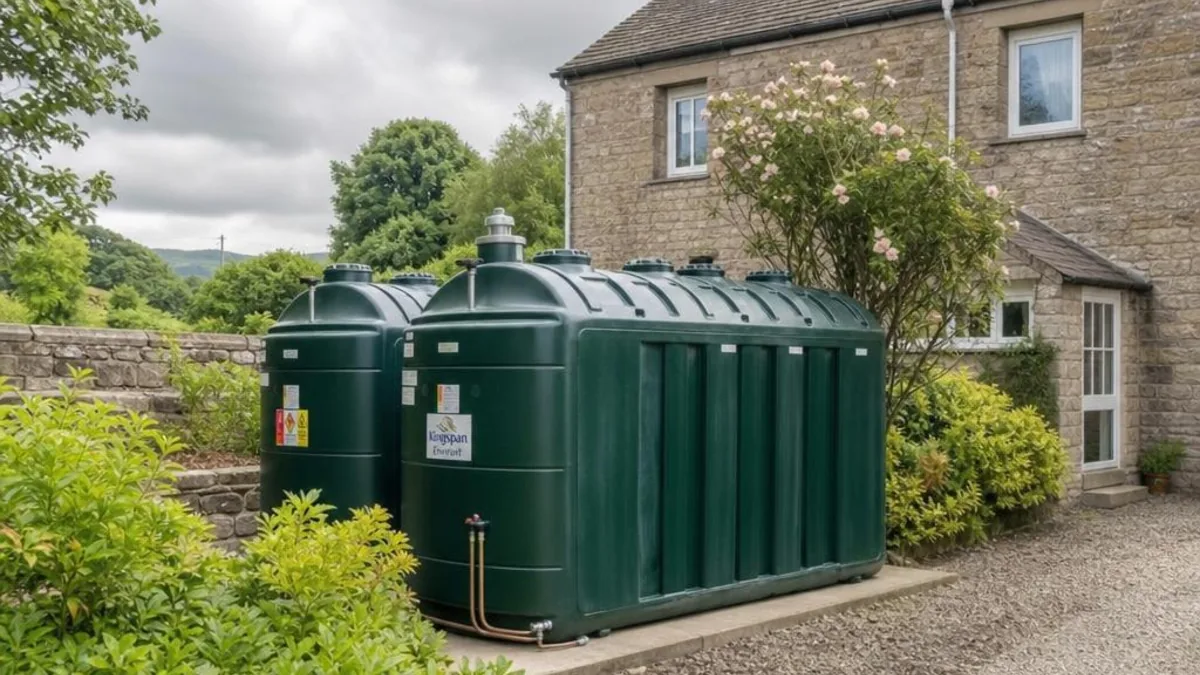
Storing heating oil at home is tightly regulated. As a tank owner, you have a legal duty to prevent oil from polluting the environment — spills and leaks that contaminate soil or watercourses can result in significant fines and clean-up costs under the Environmental Permitting (England and Wales) Regulations 2016 and equivalent legislation in Scotland and Northern Ireland.
The Oil Storage Regulations (England) 2001 (and equivalent devolved legislation) set out specific requirements for any storage of oil above 200 litres at a domestic property. The majority of domestic heating oil tanks exceed this threshold. Building Regulations Part J applies to the installation of new oil-fired heating appliances and associated tanks.
OFTEC (the Oil Firing Technical Association) publishes technical standards that underpin much of the regulatory framework. An OFTEC-registered installer should ensure that your installation meets all current requirements. If you have an older tank installed before current regulations came into force, it may have been grandfathered in, but you are still responsible for its condition and for preventing spills.
Siting requirements
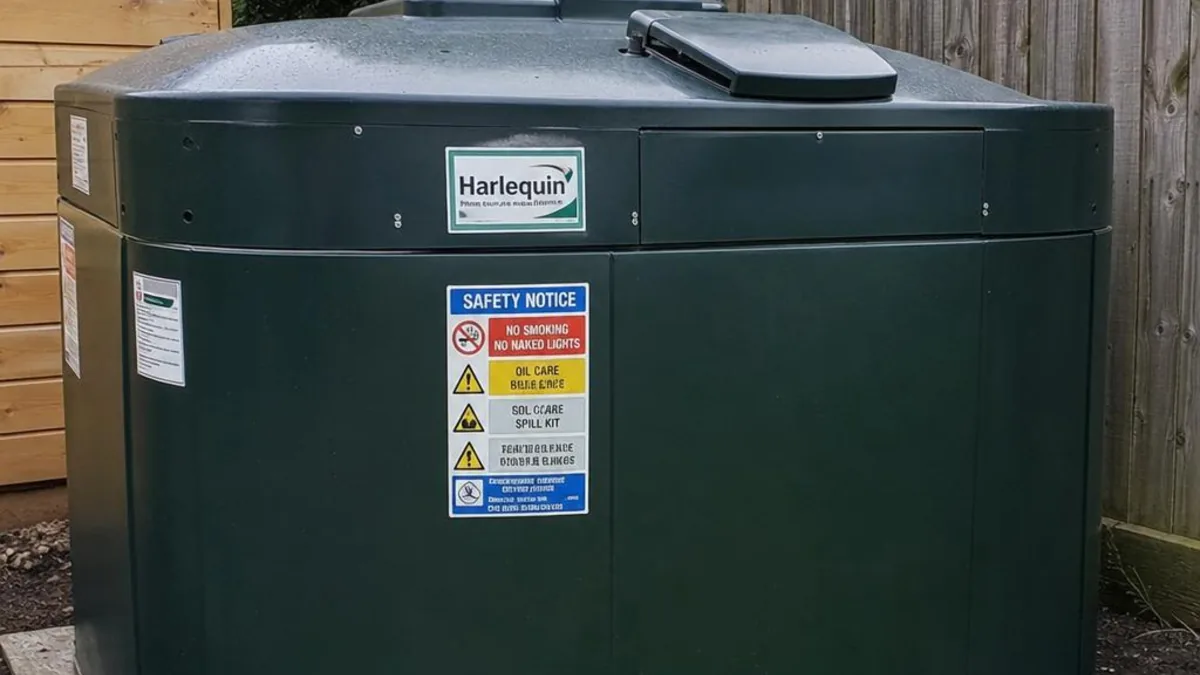
Where you place your tank matters both for safety and for regulatory compliance. The Oil Storage Regulations set minimum distances from certain features:
- At least 1.8 metres from any non-fire-rated building opening (such as a window or door)
- At least 760 mm from a non-fire-rated boundary (fence, hedge or wall that would not impede the spread of fire)
- At least 760 mm from a fixed ignition source (such as a boiler flue outlet)
- At least 10 metres from any controlled water (stream, ditch, river, pond, or drain that connects to a watercourse)
These are minimum distances. A greater separation is always preferable, particularly from water features. If you cannot achieve the required distances due to site constraints, you may need to install a fire-rated wall or barrier — seek advice from an OFTEC-registered engineer.
Tanks should be sited on a firm, level base capable of supporting the full weight when filled. A 1,500-litre tank filled with kerosene weighs approximately 1,215 kg. A properly constructed concrete slab or purpose-made tank base is the standard solution.
Bunding rules
A bunded tank has a secondary containment shell — typically built into the design of the tank — that can hold at least 110% of the primary tank's capacity. This means that if the inner tank leaks or fails completely, all the oil is contained within the outer shell rather than escaping into the ground.
The Oil Storage Regulations (England) require a bunded tank if any of the following apply:
- The tank is within 10 metres of a watercourse or 50 metres of a borehole or spring used for drinking water
- The tank is within a Source Protection Zone (SPZ)
- The site has a history of flooding
- The tank cannot otherwise meet the required setback distances from water
In Scotland, the Water Environment (Controlled Activities) (Scotland) Regulations 2011 effectively require bunding for most new domestic installations. Building Regulations in England and Wales are also moving toward bunding as the default. If you are installing a new tank, a bunded model is the safest and most future-proof choice regardless of whether it is strictly required in your specific location.
Fire safety distances
Kerosene has a flash point above 38°C (in practice, domestic kerosene is typically well above this), which means it is relatively difficult to ignite compared to petrol. Nevertheless, fire safety distances must be respected. The fill and vent pipes should be accessible and identifiable, and the tank should be fitted with a lockable filler cap. Keep vegetation and combustible materials well clear of the tank — grass and weeds around a tank can be a fire hazard and also make inspection difficult.
Preventing oil theft
Heating oil theft has been a persistent problem in rural areas. A full 1,500-litre tank holds enough kerosene to be well worth stealing, and rural tanks are often out of sight of the house. Thefts typically happen overnight using a pump and a vehicle. Preventive measures include:
- Locking filler cap — fit a cap that requires a key to open. This is the single most effective deterrent.
- Tank alarm — a low-level alarm alerts you (and sometimes a monitoring centre) when the oil level drops unexpectedly fast, indicating a possible theft or leak.
- Security lighting and CCTV — motion-activated lights in the tank area are a low-cost deterrent.
- Cage or enclosure — a locked cage or building around the tank significantly increases the time and difficulty of theft.
- Visible marking — UV-reactive marker kits are available that can be added to your oil to allow stolen fuel to be identified. Some rural police forces operate marking schemes.
Report any suspected theft to the police and to your oil supplier. Keep delivery records so you can demonstrate your stock level if a claim is made on your home insurance. Most home insurance policies cover oil theft if preventive measures are in place.
What to do if you have a spill
Even a small oil spill must be dealt with promptly. Kerosene can penetrate soil quickly and contaminate groundwater. If you have a spill:
- Stop the source — isolate the tank outlet and stop any delivery in progress.
- Contain the spill — use sand, cat litter or proprietary spill absorbent to prevent the oil spreading. Do not wash it down a drain.
- Do not use detergent — soap makes oil more mobile in soil and can worsen contamination.
- Report to the Environment Agency — in England, call the 24-hour incident hotline on 0800 80 70 60. In Scotland contact SEPA; in Wales, Natural Resources Wales; in Northern Ireland, the NIEA.
- Contact a specialist contractor — larger spills require professional remediation. Your insurer should be notified.
Prevention is always better than remediation. A well-maintained bunded tank inspected regularly is your best protection against an expensive and distressing spill event.